
Gut Basics
What Is the Gut Microbiome? Explained Simply
What is the gut microbiome? It is the community of trillions of microbes living in your digestive tract, with most concentrated in your large intestine. These tiny residents help break down food components you cannot digest on your own—and your daily habits help shape their environment.
What is the gut microbiome, exactly?
Think of your gut as an ecosystem, not an empty tube. It houses bacteria, viruses, fungi, and other microscopic organisms. Many are normal residents that live alongside you without causing harm.
People commonly use “gut microbiome” to mean this microbial community. More precisely, the term also includes the microbes’ genes and their surrounding environment. “Gut microbiota” refers to the organisms themselves.
Your mix is personal. Food, age, environment, medications, and other factors help shape it. There is no single perfect lineup of microbes that everyone needs to match.
What do those microbes actually do?
Your digestive enzymes cannot break down dietary fiber. Some gut microbes can ferment certain fibers and produce compounds called short-chain fatty acids. One of these, butyrate, helps fuel the cells lining your colon.
Gut microbes also interact with the intestinal lining and immune system. Some produce vitamins, though that does not replace the need for a balanced diet.
Fermentation also produces gas. That is a normal part of digestion, not automatic proof that something is wrong. How comfortable you feel depends on more than your microbial mix.
Fiber helps feed your gut ecosystem
Fiber does more than one job. Some types help hold water and support comfortable stool passage. Others are fermented by gut microbes. Those functions can overlap.
Prebiotics are substances that beneficial microbes use in ways that support health. Certain fermentable fibers act as prebiotics, but not every fiber qualifies. Probiotics are different: they are live microorganisms that provide a health benefit when consumed in adequate amounts.
A useful fiber benchmark is about 14 grams per 1,000 calories. Common daily targets for adults ages 19–50 are 25 grams for women and 38 grams for men. Build toward your needs gradually rather than forcing a big jump overnight.
Build variety without overcomplicating meals
Different plant foods supply different fibers and other compounds. Rotating your choices gives gut microbes a broader range of materials to work with. You do not need exotic ingredients or a perfect menu.
Start with one manageable addition. If you currently eat little fiber, adding several large servings at once may bring extra gas or bloating.
- Add oats or another whole grain to breakfast.
- Mix a small portion of beans, chickpeas, or lentils into a familiar meal.
- Choose whole fruit for a snack instead of relying on juice.
- Rotate vegetables across meals rather than eating the same one every day.
- Add nuts or seeds if they fit your dietary needs.
You cannot judge your microbiome by one symptom
Bloating, stool changes, or a noisy stomach cannot tell you which microbes live in your gut. Digestive comfort also depends on meal size, hydration, movement, stress, and how quickly you change your diet.
A microbiome is not something you need to scrub clean. Focus on consistent inputs instead of chasing a “perfect” bacterial balance. Persistent or worsening digestive changes deserve a conversation with a qualified healthcare professional.
Your next move: one small habit today
Choose one fiber-rich food to add today. Keep water within reach. Give yourself time to adjust before adding more, and pay attention to comfort and regularity—not just the number of grams.
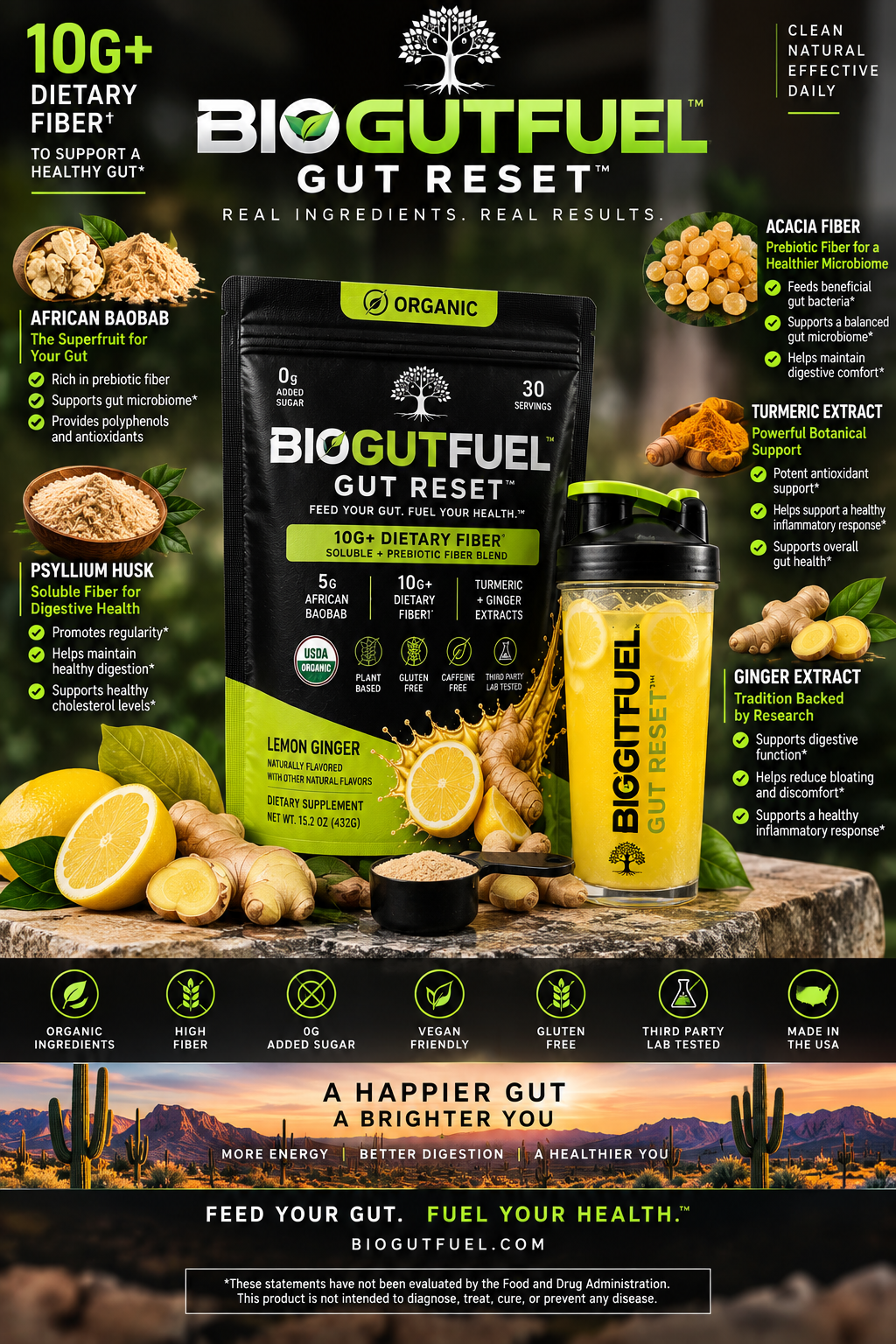
If convenience helps, BIOGUTFUEL GUT RESET is one option that helps close the daily fiber gap with 13 grams of fiber per serving from baobab, psyllium husk, and acacia. It provides prebiotic support that helps nourish beneficial gut bacteria, supports digestive comfort and regularity, and supports a healthy inflammatory response with turmeric, ginger, baobab, and plant polyphenols. Mix one serving daily into 10–12 ounces of cold water; do not exceed one serving a day.
Keep the foundation simple: varied plant foods, gradual fiber increases, and steady habits. Your next meal is a practical place to start.
Common questions
Is the gut microbiome just bacteria?
No. Bacteria are major members, but the community also includes viruses, fungi, and other microorganisms. Most gut microbes live in the large intestine.
Do I need a probiotic to support my gut microbiome?
Not necessarily. Probiotic benefits depend on the specific strain and intended use. Varied, fiber-rich foods are a practical foundation for supporting your gut ecosystem.
What is one thing I can do for my gut microbiome today?
Add a manageable portion of a fiber-rich food, such as oats, lentils, or whole fruit. Increase fiber gradually and drink water regularly to support digestive comfort.
This article is general nutrition education, not medical advice. Talk to your healthcare provider before changing your routine, especially if you are pregnant, nursing, taking medication or managing a digestive condition.
Put it into practice
Support your gut daily with BIOGUTFUEL
Everything in this article gets easier with consistency. BIOGUTFUEL GUT RESET combines prebiotic fiber and baobab to support digestive comfort, healthy regularity, a healthy inflammatory response and your daily fiber target — one scoop a day.
Reader offer — 15% off your first order
GUTFUEL15
Apply at checkout. First order only.
Not sure where your gut stands?
Answer 10 quick questions and get a free, personalized 30-day gut support plan — digestive comfort, prebiotic support, fiber and daily wellness.
Keep reading
Your gut has more to say.
The next small change is one article away. Pick up where this one left off.
How much fiber do you actually need?
Guide #01The real daily target, why most people miss it by half, and how to close the gap without a week of bloating.
Read next →Gut BasicsPrebiotic vs. probiotic
Guide #02One adds bacteria, the other feeds the ones you already have. Here's which matters for your routine.
Read next →FoodFoods that support gut health
Guide #03Prebiotic fiber, fermented foods and polyphenols — plus an easy 30-plants-a-week habit.
Read next →