
Gut Basics
Prebiotic vs. probiotic: what's the difference?
One adds bacteria. The other feeds the bacteria you already have. Knowing which is which makes the supplement aisle a lot less confusing.
Guide #02The short version
Why prebiotics get less attention — and often matter more
Probiotics are easier to market: a strain name, a CFU count, a promise. But the bacteria already living in your gut outnumber anything a capsule adds, and they are shaped every single day by what you feed them.
Prebiotic fibers — acacia, inulin, baobab, resistant starch — pass through the small intestine intact and ferment in the colon. That fermentation produces short-chain fatty acids, which is the mechanism behind most of what people mean when they say "gut health."
If your plant and fiber intake is low, adding new bacteria without feeding them is like planting a garden and skipping the water.
Where postbiotics and polyphenols fit
You'll also see postbiotics — the beneficial compounds produced when microbes ferment fiber — and polyphenols, plant compounds found in things like turmeric, ginger and berries. Polyphenols behave partly like prebiotics and are commonly included for their role in supporting a healthy inflammatory response.
How to choose
- Low fiber, irregular, heavy after meals — start with prebiotic fiber and consistency.
- Recently finished a course of antibiotics — a probiotic may be worth discussing with your provider, alongside prebiotic fiber.
- Already eating 30+ plants a week — you're doing the hard part; fine-tune rather than stack.
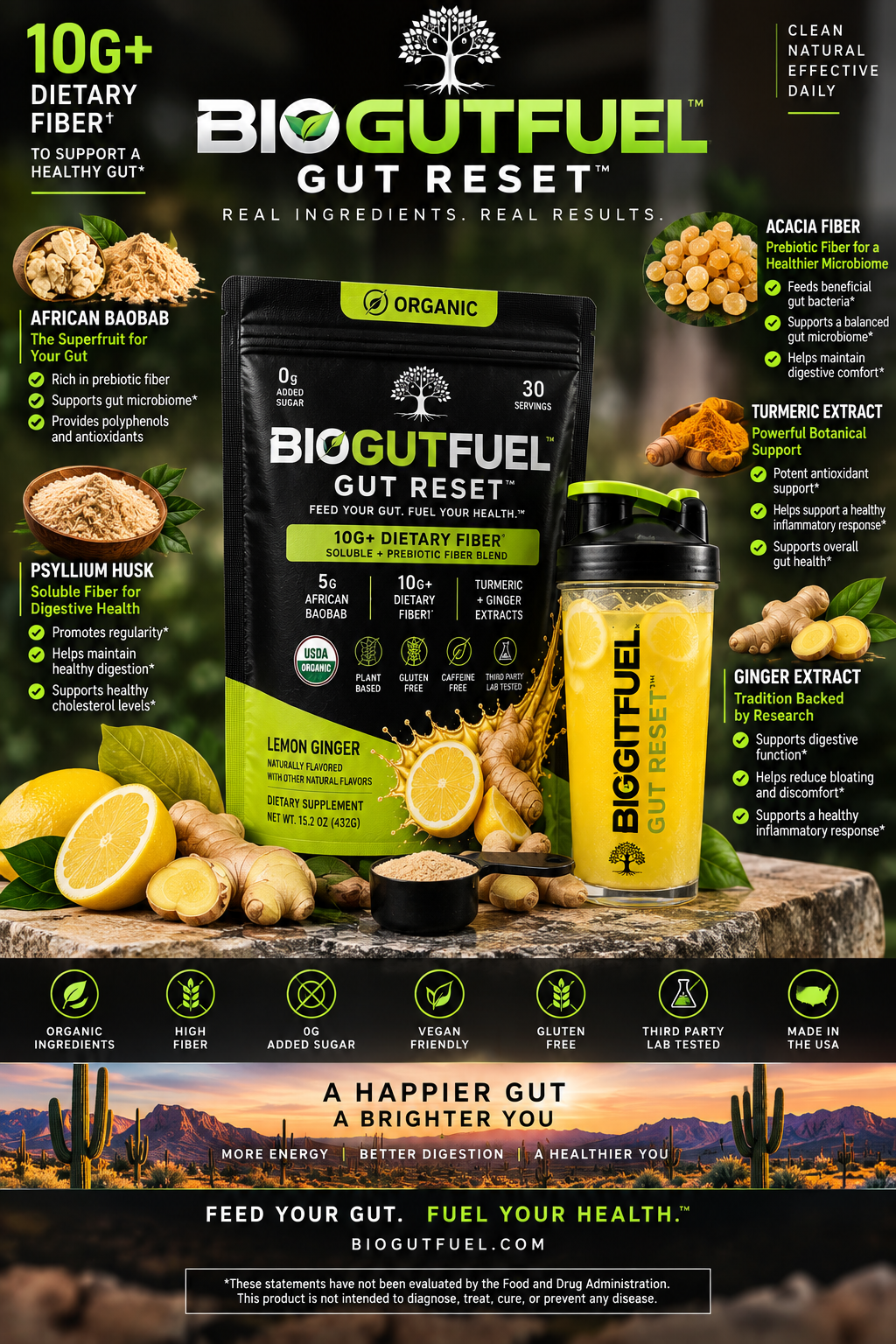
BIOGUTFUEL GUT RESET is built on the prebiotic side: acacia and psyllium fiber, African baobab, plus turmeric and ginger polyphenols, in one 13 g serving a day.
Common questions
What is the difference between a prebiotic and a probiotic?
A probiotic is live bacteria you swallow. A prebiotic is a fiber your body cannot digest that feeds the bacteria already living in your colon.
Can you take prebiotics and probiotics together?
Yes. They work on different parts of the same system, and a combination is sometimes called a synbiotic.
Which should I start with?
If your diet is low in plants and fiber, prebiotic fiber usually gives the most noticeable day-to-day change because it supports the microbes you already have and adds bulk your routine is missing.
General nutrition education, not medical advice. These statements have not been evaluated by the Food and Drug Administration. This product is not intended to diagnose, treat, cure or prevent any disease.
Put it into practice
Support your gut daily with BIOGUTFUEL
Everything in this article gets easier with consistency. BIOGUTFUEL GUT RESET combines prebiotic fiber and baobab to support digestive comfort, healthy regularity, a healthy inflammatory response and your daily fiber target — one scoop a day.
Reader offer — 15% off your first order
GUTFUEL15
Apply at checkout. First order only.
Not sure where your gut stands?
Answer 10 quick questions and get a free, personalized 30-day gut support plan — digestive comfort, prebiotic support, fiber and daily wellness.
Keep reading
Your gut has more to say.
The next small change is one article away. Pick up where this one left off.
How much fiber do you actually need?
Guide #01The real daily target, why most people miss it by half, and how to close the gap without a week of bloating.
Read next →FoodFoods that support gut health
Guide #03Prebiotic fiber, fermented foods and polyphenols — plus an easy 30-plants-a-week habit.
Read next →