
Gut Basics
Foods that support gut health
No restriction plan, no elimination list. Just the categories that do the work — and a simple way to get more variety into a normal week.
Guide #031. Prebiotic fiber — the foundation
These feed the microbes already in your colon and add the bulk most routines are missing.
2. Fermented foods — live cultures
Yogurt with live cultures, kefir, sauerkraut, kimchi, miso and tempeh. A small daily portion beats a large occasional one. Check labels: many supermarket sauerkrauts are pasteurized, which removes the live cultures.
3. Polyphenol-rich plants
Berries, extra-virgin olive oil, green tea, cocoa, turmeric, ginger and baobab. Polyphenols partly behave like prebiotics and are widely included for their role in supporting a healthy inflammatory response.
4. Hydration — the step everyone skips
Fiber without fluid can make things worse, not better. Soluble fiber needs water to form the gel that softens stool. If you add fiber and feel more backed up, water is the first thing to check.
The 30-plants-a-week habit
Aim for 30 different plant foods across a week rather than more of the same five. Herbs, spices, nuts, seeds, whole grains and beans all count individually.
- Keep a mixed bag of frozen berries — three plants in one pour.
- Buy a three-bean mix instead of one can of beans.
- Throw seeds and herbs on food you already make. They count.
- Rotate one new plant into the cart each shop.
Where a daily scoop fits
Real food first. But most weeks have travel days, late nights and skipped lunches, and fiber is the first thing to fall off. A single measured serving — 13 g of soluble and prebiotic fiber with turmeric, ginger and baobab — keeps the baseline steady on the days your plate doesn't.
Common questions
What foods are best for gut health?
A mix of prebiotic fiber sources such as oats, beans, onions and bananas; fermented foods such as yogurt, kefir and kimchi; and polyphenol-rich plants such as berries, turmeric, ginger and olive oil.
How many different plants should I eat each week?
Research on microbiome diversity often points to around 30 different plant foods a week. Herbs, spices, nuts and seeds all count.
Do I need a supplement if I eat well?
Not necessarily. A supplement is a consistency tool for days your plate falls short of your fiber target, not a replacement for eating plants.
Fiber amounts are typical values and vary by brand and preparation. General nutrition education, not medical advice.
Put it into practice
Support your gut daily with BIOGUTFUEL
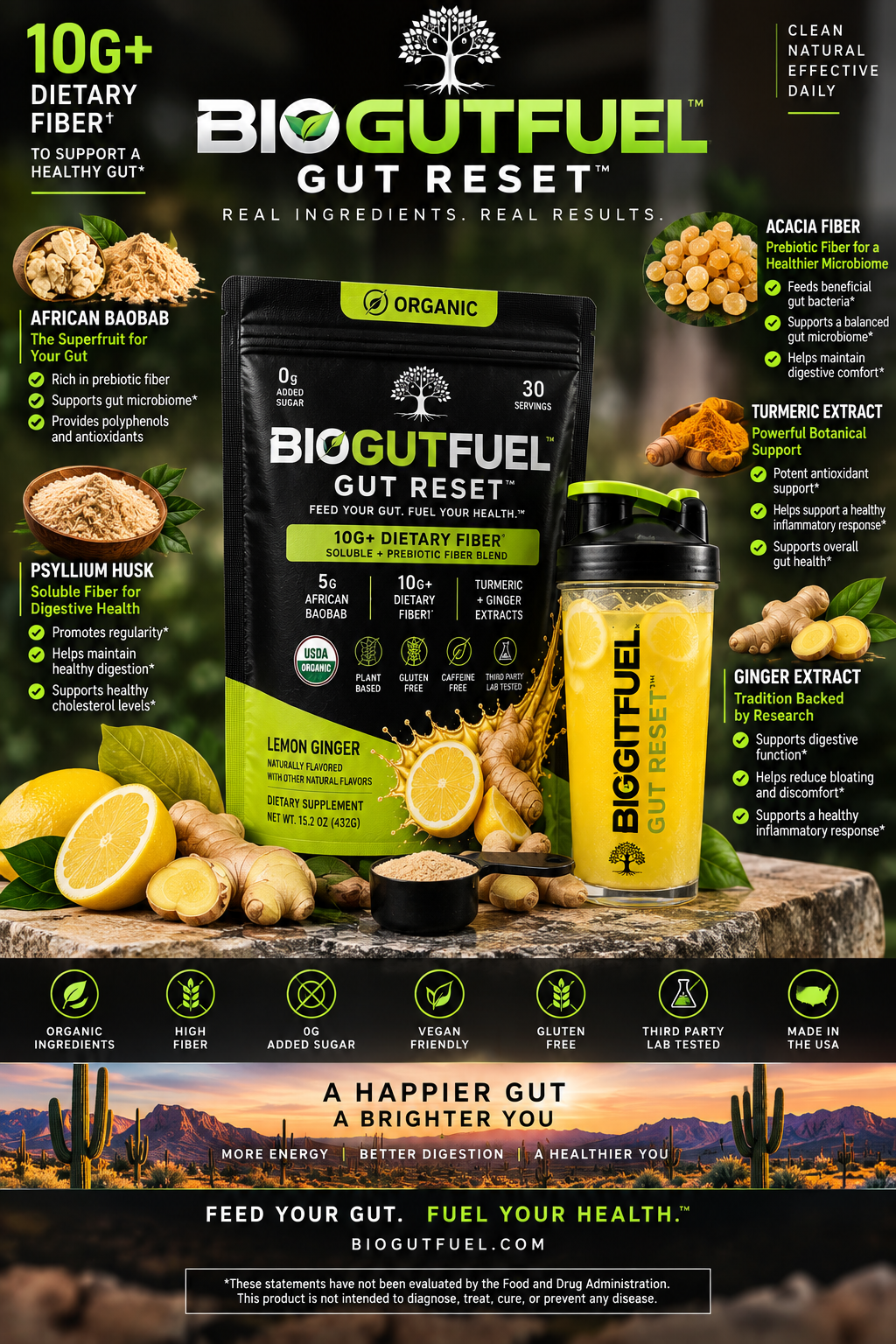
Everything in this article gets easier with consistency. BIOGUTFUEL GUT RESET combines prebiotic fiber and baobab to support digestive comfort, healthy regularity, a healthy inflammatory response and your daily fiber target — one scoop a day.
Reader offer — 15% off your first order
GUTFUEL15
Apply at checkout. First order only.
Not sure where your gut stands?
Answer 10 quick questions and get a free, personalized 30-day gut support plan — digestive comfort, prebiotic support, fiber and daily wellness.
Keep reading
Your gut has more to say.
The next small change is one article away. Pick up where this one left off.
How much fiber do you actually need?
Guide #01The real daily target, why most people miss it by half, and how to close the gap without a week of bloating.
Read next →Gut BasicsPrebiotic vs. probiotic
Guide #02One adds bacteria, the other feeds the ones you already have. Here's which matters for your routine.
Read next →