Gut Basics
What Is Gut Health? The Basics
What is gut health? It is how well your digestive system breaks down food, absorbs nutrients and moves waste, alongside the activity of the microbes living there. Think comfortable digestion and a steady routine—not a perfectly flat stomach or a daily score to chase.
What is gut health in everyday terms?
Gut health is a broad term, not one measurement. It covers digestion, bowel function, the lining of your digestive tract and the community of microbes that lives there. These systems work together, but no single food or bathroom habit tells the whole story.
Comfortable, predictable bowel movements are useful signals. So is being able to eat a varied diet without frequent digestive discomfort. You do not need to have a bowel movement every day to have a normal routine, and occasional gas is part of digestion.
- Digestion breaks food into smaller parts your body can use.
- Absorption moves nutrients and water from the digestive tract into the body.
- The gut lining helps manage what passes into the bloodstream.
- Bowel movements carry out waste and material your body does not absorb.
- Gut microbes help process some of the food your own digestive enzymes cannot break down.
Digestion: from your first bite to the bathroom
Digestion starts in your mouth. Chewing breaks food apart, and saliva begins breaking down starch. Your stomach then mixes food with acid and enzymes before moving it into the small intestine.
Most nutrient absorption happens in the small intestine, with help from digestive enzymes and bile. The large intestine absorbs more water and helps form stool. Its microbes also ferment some of the fiber that reaches it.
Fiber supports this process in different ways. Some types hold water and form a gel. Others add bulk, and some are fermented by gut bacteria. That is why getting fiber from a range of foods matters more than chasing one supposedly perfect source.
The microbiome: a community, not a scoreboard
Your gut microbiome is the community of microorganisms living in your digestive tract, along with their genetic material. It includes bacteria and other microbes. Many help process food and interact with your gut lining and immune system.
When certain gut bacteria ferment fiber, they produce compounds called short-chain fatty acids. One of these, butyrate, provides fuel for cells lining the colon. This is one way your food choices support more than bowel movements.
Prebiotics are substances that certain microbes use in ways that benefit the body. Some fibers act as prebiotics, but not all fiber does. There is also no single ideal microbiome for everyone: your diet, environment, medications and other factors help shape yours.
Why gut health matters beyond digestion
Your digestive system makes the nutrients in food available to the rest of your body. Its lining also acts as a selective barrier, and much of your immune system interacts closely with the gut. Supporting normal gut function is basic body maintenance.
The gut and brain communicate through nerves, hormones and other signals. Stress can affect bowel habits and how strongly you feel digestive sensations. That connection is real, but it does not mean every mood, energy dip or digestive symptom starts in the microbiome.
Keep expectations grounded. Gas alone does not prove your gut is unhealthy, and a flat stomach does not prove it is healthy. Persistent or worsening discomfort, blood in stool or unexplained weight loss deserves professional evaluation—not another wellness experiment.
Build a routine your gut can work with
Start with enough fiber, then build variety. General nutrition guidance is about 14 grams of fiber per 1,000 calories. Beans, oats, whole grains, vegetables, fruit, nuts and seeds all contribute. Increase fiber gradually rather than making a huge overnight jump, and drink fluids regularly.
Keep the other basics steady: regular movement, consistent sleep and time to eat without rushing. Fermented foods can add variety, but they are not automatically probiotics. A probiotic benefit depends on the specific live microorganism and the evidence behind it.
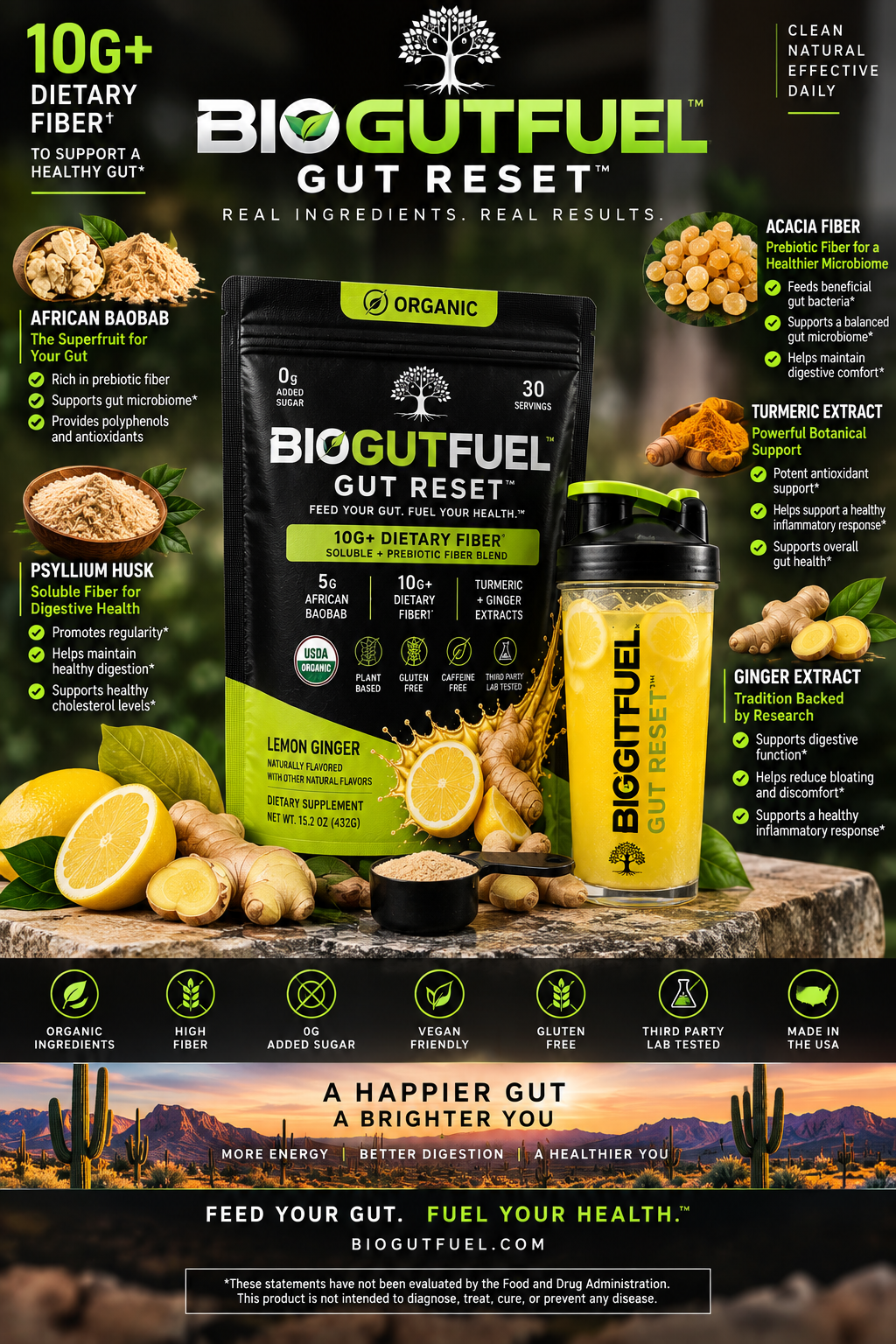
If convenience helps close the daily fiber gap, BIOGUTFUEL GUT RESET is one option: 13 grams of fiber per serving from baobab, psyllium husk and acacia, prebiotic support that helps nourish beneficial gut bacteria, digestive comfort and regularity support, and support for a healthy inflammatory response from turmeric, ginger, baobab and plant polyphenols. Use one serving daily in 10–12 ounces of cold water; one pouch contains 30 servings.
Your next move: make one useful change today
Add one fiber-rich food to a meal you already eat. Try oats at breakfast, beans with lunch or vegetables with dinner. Start with a manageable portion and build from there.
Keep water within reach, take a walk and give yourself an unhurried bathroom break when the urge comes. Notice comfort, stool consistency and your usual rhythm over the next few weeks—not just one day.
The goal is a repeatable routine that supports digestion. More variety, gradual changes and consistency beat an all-or-nothing reset.
Common questions
How do I know if my gut is healthy?
Comfortable digestion and bowel movements that are easy to pass and predictable for you are useful signs. No single symptom, stool pattern or microbiome score can establish overall gut health.
Do I need probiotics for good gut health?
Not necessarily. Probiotics are not a requirement for everyone, and their effects depend on the specific strain and intended use. Start with varied foods, enough fiber and consistent daily habits.
What is the simplest way to start supporting gut health?
Add one manageable serving of a fiber-rich food today, drink fluids regularly and build variety gradually. Keep the change small enough to repeat tomorrow.
This article is general nutrition education, not medical advice. Talk to your healthcare provider before changing your routine, especially if you are pregnant, nursing, taking medication or managing a digestive condition.
Put it into practice
Support your gut daily with BIOGUTFUEL
Everything in this article gets easier with consistency. BIOGUTFUEL GUT RESET combines prebiotic fiber and baobab to support digestive comfort, healthy regularity, a healthy inflammatory response and your daily fiber target — one scoop a day.
Reader offer — 15% off your first order
GUTFUEL15
Apply at checkout. First order only.
Not sure where your gut stands?
Answer 10 quick questions and get a free, personalized 30-day gut support plan — digestive comfort, prebiotic support, fiber and daily wellness.
Keep reading
Your gut has more to say.
The next small change is one article away. Pick up where this one left off.
How much fiber do you actually need?
Guide #01The real daily target, why most people miss it by half, and how to close the gap without a week of bloating.
Read next →Gut BasicsPrebiotic vs. probiotic
Guide #02One adds bacteria, the other feeds the ones you already have. Here's which matters for your routine.
Read next →FoodFoods that support gut health
Guide #03Prebiotic fiber, fermented foods and polyphenols — plus an easy 30-plants-a-week habit.
Read next →