
Digestive Comfort
What Causes Bloating? Everyday Triggers and Comfort Habits
What causes bloating? Often, it is a mix of swallowed air, gas produced during digestion, and how comfortably food and stool move through your gut. Meal size, eating speed, and sudden changes in fiber can all play a part.
What causes bloating—and what does it actually mean?
Bloating is the feeling of fullness, pressure, or tightness in your abdomen. Your belly may look larger, but it does not have to. The sensation and visible expansion are related, not identical.
Some gas is a normal part of digestion. You swallow air when you eat and drink, and gut bacteria produce gas as they break down certain carbohydrates. How that gas moves—and how sensitive your gut is to stretching—can affect how bloated you feel.
Bloating does not automatically mean a food is unhealthy or that your gut needs a cleanse. The useful question is whether a repeatable pattern connects your discomfort with a particular food, portion, or habit.
- Eating quickly: rushing meals, chewing gum, or drinking through a straw can increase swallowed air.
- Carbonated drinks: the bubbles add gas, which can contribute to pressure or fullness.
- Large meals: bigger portions stretch the stomach; higher-fat meals can also slow stomach emptying.
- Certain carbohydrates: beans, onions, and some sugar alcohols can produce more gas during fermentation. Lactose can do the same for people who do not digest it well.
- Sudden fiber increases: jumping from little fiber to large amounts can increase gas before your routine settles.
Regularity, stress, and daily rhythm matter too
When stool moves slowly or is difficult to pass, bloating can become more noticeable. Consistent meals, adequate fluids, movement, and making time for bathroom breaks support a more comfortable routine.
Stress can influence gut movement and how strongly you notice digestive sensations. Some people also notice bloating around their menstrual cycle. These patterns are worth tracking alongside food, rather than blaming the last thing you ate.
Build fiber steadily, not all at once
Fiber supports regularity, and fermentable fibers feed beneficial gut bacteria. But more is not automatically more comfortable overnight. Increase fiber gradually, with adequate fluids, instead of stacking several new high-fiber foods and supplements into one day.
A well-established nutrition guideline is about 14 grams of fiber per 1,000 calories. Use that as context for building a consistent eating pattern—not a target you must hit immediately.
Keep variety in the picture: oats, fruit, vegetables, beans, nuts, and seeds all contribute. If a food repeatedly feels uncomfortable, first look at portion size and preparation rather than cutting out an entire food group.
Track patterns without over-restricting
For a week or two, jot down meal timing, approximate portions, eating speed, bowel habits, and when bloating shows up. Note any new supplements or major food changes. A short record is more useful than trying to remember every meal.
Change one thing at a time. Try slowing down at lunch or swapping one fizzy drink for still water. Keeping the rest of your routine steady makes patterns easier to spot.
Persistent, worsening, or recurring bloating deserves a conversation with a healthcare professional, especially with unexplained weight loss or changes in bowel habits. Severe abdominal pain, vomiting, or blood in stool warrants prompt medical attention.
Your next steps for digestive comfort
Start with the basics, not a total diet overhaul. Choose manageable portions, slow your eating pace, keep water available, and make room for gentle movement. Build a routine you can repeat.
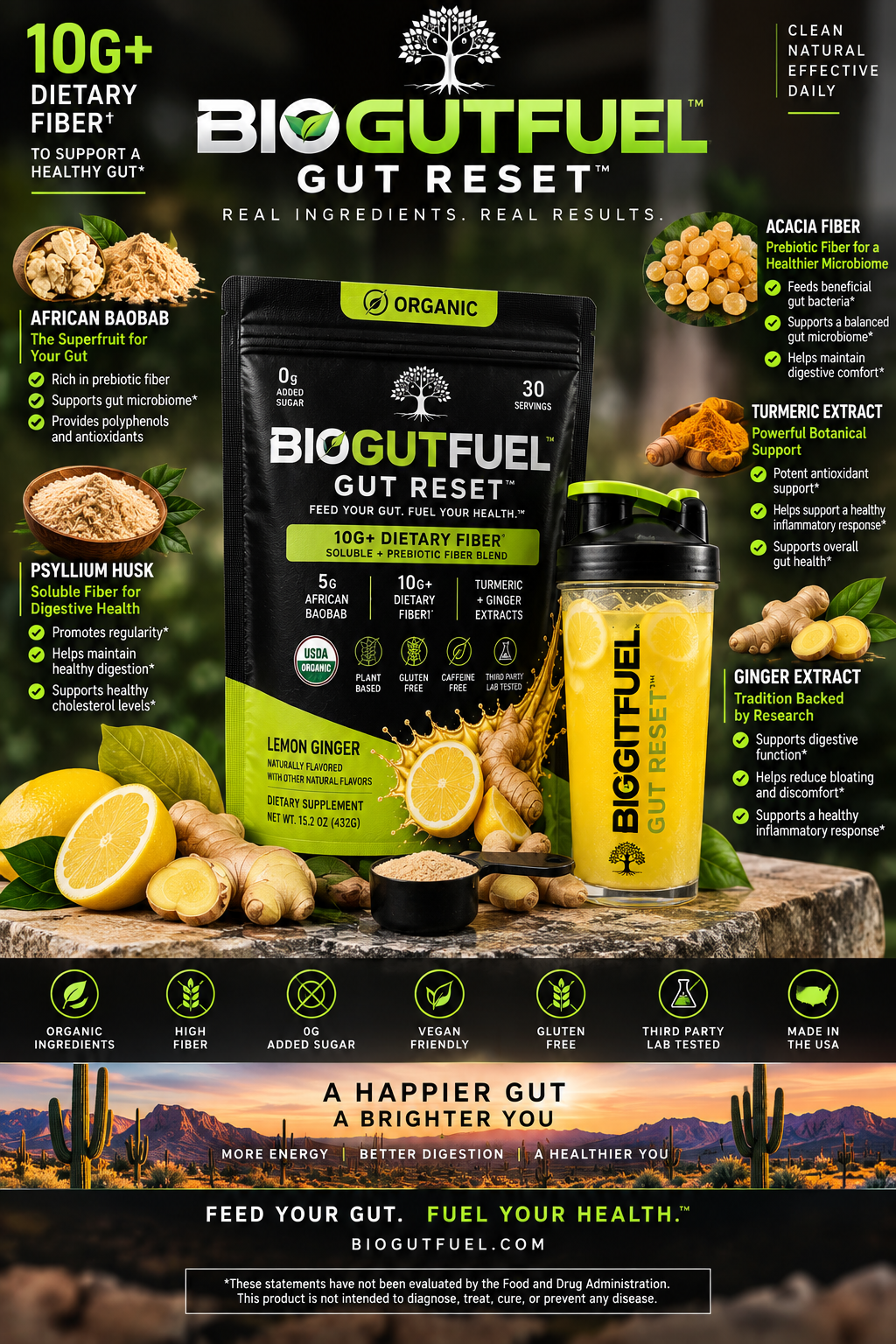
For a convenient daily option, BIOGUTFUEL GUT RESET provides 13 grams of fiber per serving from baobab, psyllium husk, and acacia to help close the daily fiber gap. It provides prebiotic support that helps nourish beneficial gut bacteria, supports digestive comfort and regularity, and supports a healthy inflammatory response with turmeric, ginger, baobab, and plant polyphenols. Mix one serving into 10–12 ounces of cold water; do not exceed one serving daily.
Today, pick one habit: eat one meal without rushing, replace a carbonated drink with still water, or take a comfortable walk after eating. Note how you feel. Small, consistent changes give you a clearer picture than changing everything at once.
Common questions
Why do I feel bloated after eating healthy foods?
Foods such as beans, vegetables, and whole grains contain carbohydrates that gut bacteria ferment, producing gas. Large portions or a sudden fiber increase can make this more noticeable. Gradual changes may help support comfort.
Can drinking water help with bloating?
Adequate water supports normal bowel function, especially as fiber intake increases. It does not directly remove gas or guarantee relief. Still water may feel more comfortable than carbonated drinks.
Should I stop eating fiber if I feel bloated?
Not automatically. Check whether you recently increased fiber quickly or added several new sources. Gradual changes and adequate fluids support a more comfortable routine. Discuss persistent symptoms with a healthcare professional.
This article is general nutrition education, not medical advice. Talk to your healthcare provider before changing your routine, especially if you are pregnant, nursing, taking medication or managing a digestive condition.
Put it into practice
Support your gut daily with BIOGUTFUEL
Everything in this article gets easier with consistency. BIOGUTFUEL GUT RESET combines prebiotic fiber and baobab to support digestive comfort, healthy regularity, a healthy inflammatory response and your daily fiber target — one scoop a day.
Reader offer — 15% off your first order
GUTFUEL15
Apply at checkout. First order only.
Not sure where your gut stands?
Answer 10 quick questions and get a free, personalized 30-day gut support plan — digestive comfort, prebiotic support, fiber and daily wellness.
Keep reading
Your gut has more to say.
The next small change is one article away. Pick up where this one left off.
How much fiber do you actually need?
Guide #01The real daily target, why most people miss it by half, and how to close the gap without a week of bloating.
Read next →Gut BasicsPrebiotic vs. probiotic
Guide #02One adds bacteria, the other feeds the ones you already have. Here's which matters for your routine.
Read next →FoodFoods that support gut health
Guide #03Prebiotic fiber, fermented foods and polyphenols — plus an easy 30-plants-a-week habit.
Read next →