
Gut Basics
Soluble vs Insoluble Fiber: Why Your Gut Needs Both
Soluble vs insoluble fiber is not a contest. These two types do different jobs, and getting a mix supports digestive comfort, regularity and a well-fed gut microbiome.
Soluble vs insoluble fiber: the basic difference
Fiber is carbohydrate that your digestive enzymes do not fully break down. Soluble and insoluble describe how that fiber behaves in water—not whether one type is better for you.
Many plant foods contain both types. You do not need to separate them at every meal or hit a specific ratio. Focus on enough total fiber from varied sources.
Soluble fiber: water management and bacterial fuel
Some soluble fibers form a gel that holds water. This may help support softer, more formed stools and comfortable regularity. Psyllium is a familiar example of a gel-forming fiber.
Other soluble fibers are readily fermented by gut bacteria. That process produces compounds called short-chain fatty acids, which support the cells lining your colon. Fermentable fibers that selectively nourish beneficial microbes can provide prebiotic support.
Soluble does not automatically mean highly fermentable. Psyllium is relatively resistant to fermentation, while fibers such as acacia are more readily fermented. Water solubility, gel formation and fermentation are different properties.
Insoluble fiber: bulk that keeps things moving
Insoluble fiber largely keeps its structure as it moves through your digestive tract. It adds bulk to stool and supports regular movement through the bowel.
Find it in whole-wheat foods, wheat bran, nuts, seeds and the skins of many fruits and vegetables. These foods often bring soluble fiber along for the ride.
More is not automatically more comfortable. A sudden jump in bran, raw vegetables or other high-fiber foods can bring extra gas and fullness. Build your intake gradually rather than forcing a huge serving.
Build your daily total, not a perfect ratio
A common nutrition guideline is about 14 grams of fiber per 1,000 calories. Daily reference targets for adults ages 19–50 are 25 grams for women and 38 grams for men. Your needs vary with age and energy intake; there is no standard daily target for a soluble-to-insoluble split.
Mix sources across the day: oats and berries at breakfast, beans with lunch, and whole grains plus vegetables at dinner. Increase fiber in small steps and drink water regularly. Fermentation naturally produces gas, so give your gut time to adjust.
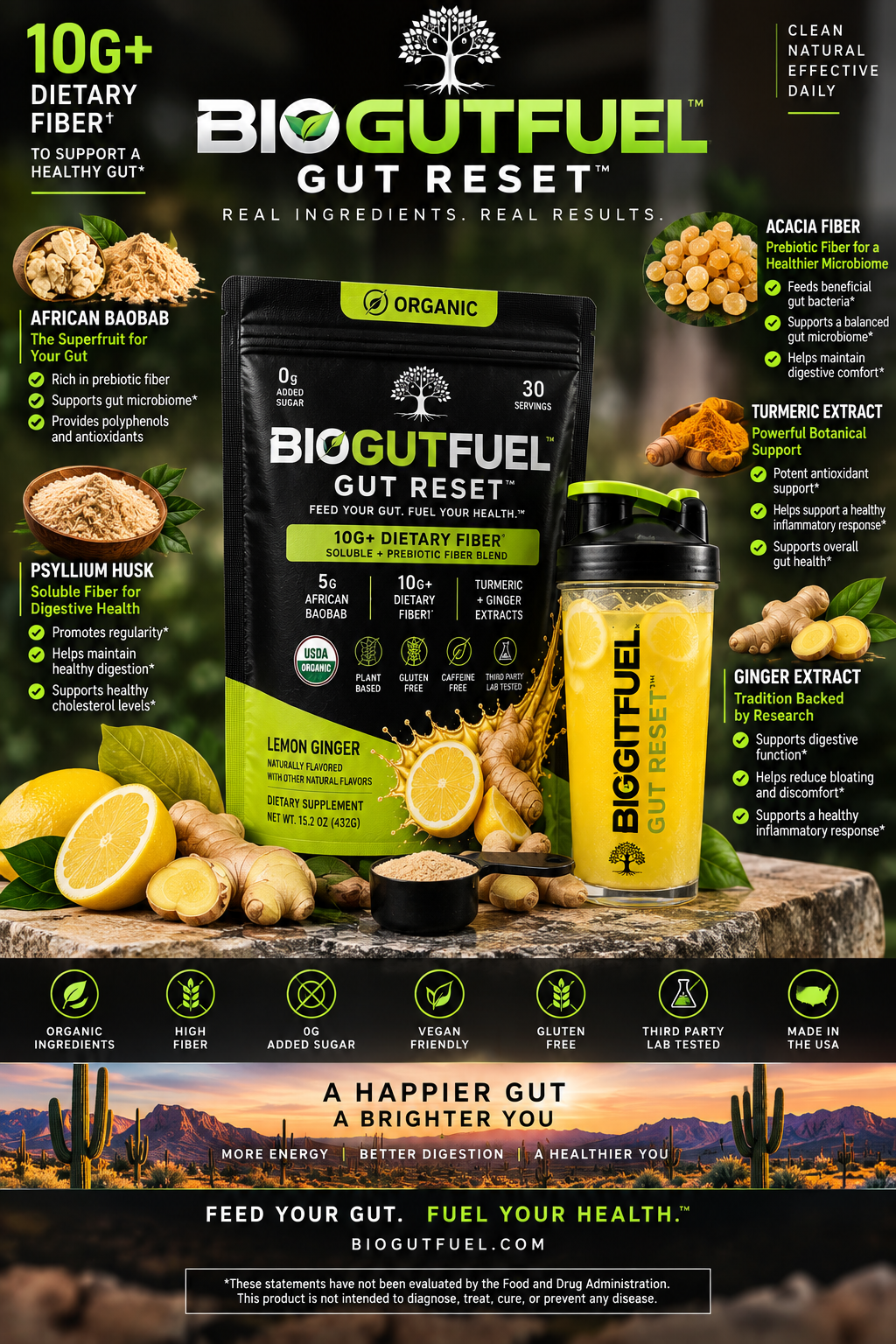
For a convenient option alongside food, BIOGUTFUEL GUT RESET provides 13 grams of daily fiber per serving from baobab, psyllium husk and acacia to help close the daily fiber gap. It provides prebiotic support to nourish beneficial gut bacteria, supports digestive comfort and regularity, and supports a healthy inflammatory response with turmeric, ginger, baobab and plant polyphenols. Mix one serving a day into 10–12 ounces of cold water; one 30-serving pouch covers 30 days.
Put both types to work today
Start with one manageable change. Consistency beats trying to squeeze your entire fiber target into one meal.
- Check your usual meals for a fiber gap, then add one food such as oats, beans or a piece of fruit.
- Choose whole grains more often and keep edible fruit and vegetable skins when practical.
- Spread fiber across meals instead of loading it all into dinner.
- Keep water part of the routine, especially when adding gel-forming fiber.
- Notice your digestive comfort before increasing again. Hold steady rather than pushing through discomfort.
Common questions
Which is better for regularity: soluble or insoluble fiber?
Both contribute. Gel-forming soluble fiber supports stool consistency, while insoluble fiber adds bulk and supports movement. A varied mix is generally more useful than choosing just one.
Is all soluble fiber prebiotic?
No. Soluble describes how fiber behaves in water. Prebiotic describes a benefit from selective use by beneficial microbes. Not all soluble fibers meet that definition.
What is an easy way to get both types of fiber?
Combine different plant foods rather than tracking a ratio. Try oats with berries, beans with brown rice, or whole-grain toast with a piece of fruit. Add gradually and keep water in your routine.
This article is general nutrition education, not medical advice. Talk to your healthcare provider before changing your routine, especially if you are pregnant, nursing, taking medication or managing a digestive condition.
Put it into practice
Support your gut daily with BIOGUTFUEL
Everything in this article gets easier with consistency. BIOGUTFUEL GUT RESET combines prebiotic fiber and baobab to support digestive comfort, healthy regularity, a healthy inflammatory response and your daily fiber target — one scoop a day.
Reader offer — 15% off your first order
GUTFUEL15
Apply at checkout. First order only.
Not sure where your gut stands?
Answer 10 quick questions and get a free, personalized 30-day gut support plan — digestive comfort, prebiotic support, fiber and daily wellness.
Keep reading
Your gut has more to say.
The next small change is one article away. Pick up where this one left off.
How much fiber do you actually need?
Guide #01The real daily target, why most people miss it by half, and how to close the gap without a week of bloating.
Read next →Gut BasicsPrebiotic vs. probiotic
Guide #02One adds bacteria, the other feeds the ones you already have. Here's which matters for your routine.
Read next →FoodFoods that support gut health
Guide #03Prebiotic fiber, fermented foods and polyphenols — plus an easy 30-plants-a-week habit.
Read next →