
Fiber Fundamentals
Psyllium Husk: Benefits, Fiber & How It Works
Psyllium husk is one of the best-studied supplemental fibers, but its biggest strength is simple: it holds water. Here’s how that supports regularity, what makes it different from other fibers, and how to build a comfortable daily habit.
What is psyllium husk?
Psyllium comes from the outer coating of seeds from the Plantago ovata plant. That husk is rich in soluble fiber—fiber that absorbs water and forms a gel.
Your digestive enzymes do not break fiber down the way they break down starch. Psyllium moves through the digestive tract while holding water, giving it a useful role in stool consistency and comfortable regularity.
It is widely studied as a supplemental fiber. That does not make it the only fiber worth eating. Different fibers do different jobs, and a varied diet still matters.
- Soluble describes fiber that interacts with water; psyllium forms a thick gel.
- Viscous describes that gel’s thickness, which helps explain how psyllium works.
- Fermentable describes fiber that gut microbes can break down; psyllium is relatively resistant to fermentation.
Psyllium husk benefits start with water
Think of psyllium as a water-holding network, not a scrub brush. Its gel helps keep moisture in stool and adds bulk, supporting a more formed, comfortable consistency.
That gel also helps explain benefits beyond the bathroom. Psyllium can support cholesterol levels already within the normal range and a healthy blood-sugar response to meals as part of a balanced diet.
Those benefits are not a reason to chase the biggest scoop. Product formulation, the amount used, consistent habits, and adequate fluid all matter. More fiber at once can mean more discomfort—not better results.
Is psyllium a prebiotic?
Fiber and prebiotic are not interchangeable labels. Prebiotic fibers are used by beneficial gut microbes in ways that support health. Psyllium’s main strength is its water-holding gel, rather than extensive fermentation.
Other fibers, including acacia and fibers found in many plant foods, offer more fermentable material to help nourish beneficial gut bacteria. A fiber routine can make room for both gel-forming fiber and fermentable fiber.
Keep the food foundation broad: beans, oats, fruit, vegetables, nuts, and seeds. A supplement can help close the daily fiber gap, but it does not replace the range of nutrients those foods provide.
How to use psyllium comfortably
Check the label before measuring. Grams of psyllium husk are not necessarily the same as grams of dietary fiber, and whole husk, fine powder, and blended products can have different directions. Increase total fiber gradually rather than making a sudden jump.
Never swallow psyllium powder dry. Mix it with the full amount of liquid specified on the label and drink promptly before it becomes too thick. Adequate fluid is essential; people with swallowing difficulties or a prescribed fluid restriction should ask a healthcare professional before using it.
Psyllium can affect how some medicines are absorbed. Ask a pharmacist about spacing rather than guessing. Severe abdominal pain, vomiting, or trouble swallowing needs medical attention—not another serving of fiber.
Build the habit, not a bigger scoop
Start today by checking the fiber in your usual meals. A common nutrition guideline is about 14 grams per 1,000 calories. Add one manageable food-based source, keep fluids consistent, and notice how your digestion responds before adding more.
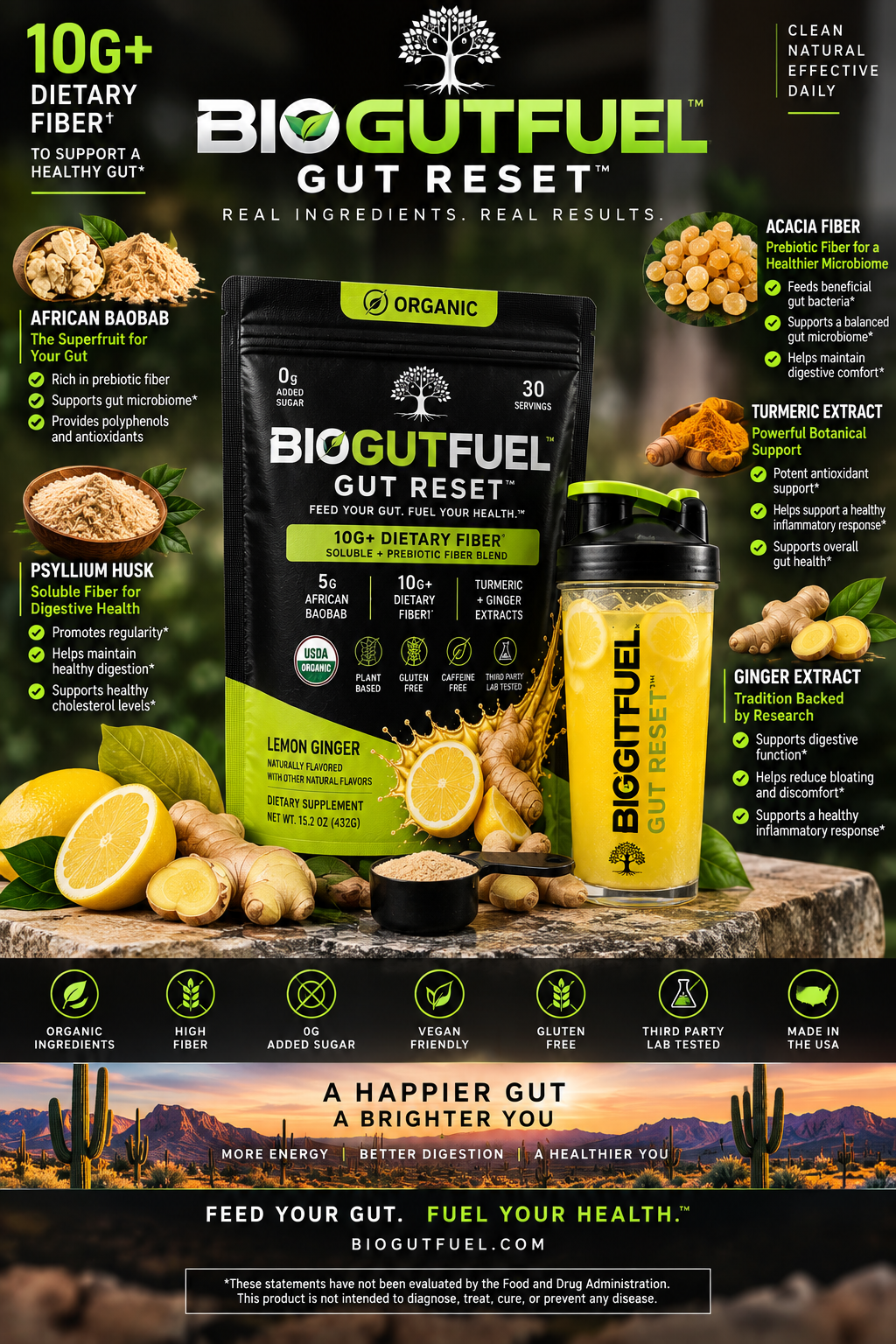
For a convenient daily option, BIOGUTFUEL GUT RESET combines 13 grams of fiber per serving from baobab, psyllium husk, and acacia. Its four-part approach helps close the daily fiber gap, provides prebiotic support to nourish beneficial gut bacteria, supports digestive comfort and regularity, and supports a healthy inflammatory response with turmeric, ginger, baobab, and plant polyphenols.
If using that blend, follow its directions: one serving a day mixed into 10–12 ounces of cold water. One pouch provides 30 daily servings. Whatever your approach, keep the next step simple: choose a repeatable fiber habit, use enough liquid, and prioritize comfort over speed.
Common questions
Can you take psyllium husk every day?
Psyllium can fit into a daily fiber routine when used according to the label with adequate liquid. Build fiber intake gradually, and ask a pharmacist about timing if you take medicines.
Does psyllium husk cause bloating?
It can, especially when fiber intake rises quickly. Psyllium is relatively resistant to fermentation, but that does not make it discomfort-free. Increase fiber gradually rather than stacking several new sources at once.
What is the best first step with psyllium husk?
Read your product’s serving and mixing directions. Use the full recommended amount of liquid, never take the powder dry, and keep the rest of your fiber routine steady while you assess comfort.
This article is general nutrition education, not medical advice. Talk to your healthcare provider before changing your routine, especially if you are pregnant, nursing, taking medication or managing a digestive condition.
Put it into practice
Support your gut daily with BIOGUTFUEL
Everything in this article gets easier with consistency. BIOGUTFUEL GUT RESET combines prebiotic fiber and baobab to support digestive comfort, healthy regularity, a healthy inflammatory response and your daily fiber target — one scoop a day.
Reader offer — 15% off your first order
GUTFUEL15
Apply at checkout. First order only.
Not sure where your gut stands?
Answer 10 quick questions and get a free, personalized 30-day gut support plan — digestive comfort, prebiotic support, fiber and daily wellness.
Keep reading
Your gut has more to say.
The next small change is one article away. Pick up where this one left off.
How much fiber do you actually need?
Guide #01The real daily target, why most people miss it by half, and how to close the gap without a week of bloating.
Read next →Gut BasicsPrebiotic vs. probiotic
Guide #02One adds bacteria, the other feeds the ones you already have. Here's which matters for your routine.
Read next →FoodFoods that support gut health
Guide #03Prebiotic fiber, fermented foods and polyphenols — plus an easy 30-plants-a-week habit.
Read next →