
Digestive Comfort
Probiotics for Bloating: Research Check
Probiotics for bloating sound like an easy fix. The research is less straightforward: some strains may support digestive comfort, but results vary, and adding more bacteria is not always the right starting point.
Probiotics for bloating: what does the research actually say?
Probiotics are live microorganisms that, in adequate amounts, provide a health benefit. But “probiotic” describes a broad category—not one ingredient with one predictable effect.
Human trials suggest that certain strains may help with bloating in some people. Other trials find little or no benefit. Studies differ in the strains, amounts, duration, and participants they use, making a universal recommendation difficult.
Much of the research involves people with ongoing digestive symptoms, rather than otherwise healthy people who occasionally feel puffy after a meal. Results from one group do not automatically apply to everyone. The takeaway: probiotics may support comfort, but they are not a reliable shortcut.
Strain names matter more than big numbers
A useful probiotic label identifies the genus, species, and strain. For example, in Lactiplantibacillus plantarum 299v, “299v” identifies the strain. Research on that strain does not establish that every L. plantarum product offers the same benefit.
The examples below have been studied for digestive outcomes. They are not a shopping shortlist or proof that a product will help your bloating.
Set expectations before trying a probiotic
More colony-forming units, or CFUs, do not automatically mean better results. Neither does a longer list of strains. Look for a clearly identified strain, an amount supported by relevant human research, and storage instructions that help maintain viability through expiration.
Research usually evaluates daily use over several weeks—not a single dose after a heavy meal. There is no universal timeline. Change one thing at a time and track meal size, bloating, and bowel regularity so you can judge whether the habit is useful.
Some people notice more gas when starting a probiotic. That is not proof it is working, and worsening discomfort is not something to push through. People who are seriously ill or have weakened immune systems should discuss probiotic use with a healthcare professional first.
Alternatives: check the basics before adding bacteria
Bloating does not automatically mean you need more beneficial bacteria. Large meals, eating quickly, carbonated drinks, and certain fermentable carbohydrates can all contribute. Start by noticing patterns rather than cutting out entire food groups.
Fiber supports regularity, while prebiotic fibers feed beneficial gut bacteria already living in your gut. General guidance is about 14 grams of fiber per 1,000 calories. Increase gradually: a sudden jump in fiber can create more gas, even when the foods are nutritious.
Build from foods such as oats, fruit, vegetables, beans, and seeds in portions you tolerate. Drink water regularly and keep moving. If bloating is persistent, new, worsening, or accompanied by pain, vomiting, blood in the stool, or unexplained weight loss, seek medical evaluation rather than experimenting with supplements.
Your next move: build a repeatable routine
Do not make your gut routine a guessing game. Start with a manageable food or eating-habit change. If you choose a probiotic, look for strain-specific evidence that matches your goal—not just a high CFU count.
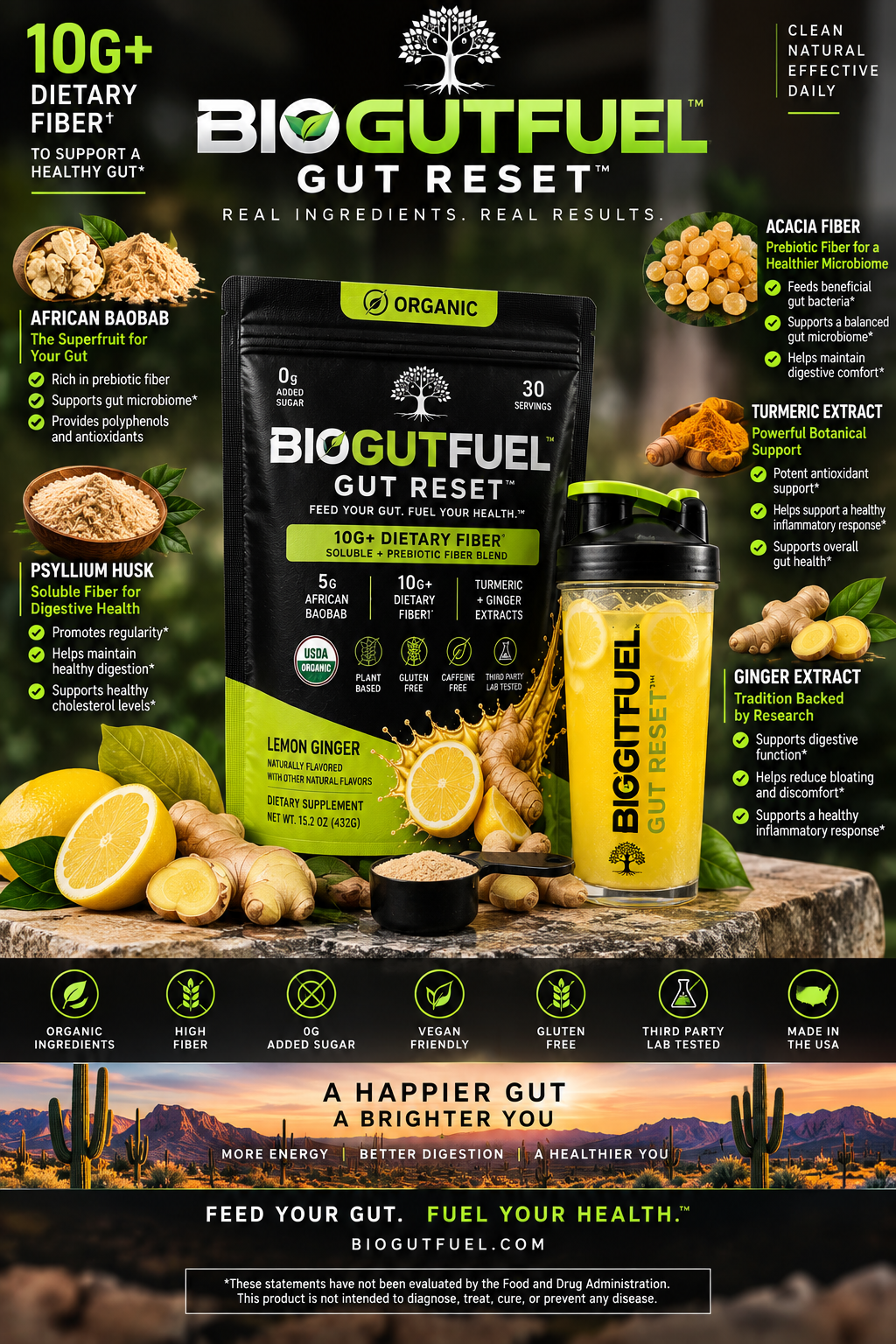
For a convenient fiber option, BIOGUTFUEL GUT RESET provides 13 grams per serving from baobab, psyllium husk, and acacia. It helps close the daily fiber gap, provides prebiotic support to nourish beneficial gut bacteria, supports digestive comfort and regularity, and supports a healthy inflammatory response with turmeric, ginger, baobab, and plant polyphenols. The daily serving is mixed into 10–12 ounces of cold water; do not exceed one serving a day.
Keep today's action plan simple:
- Write down when bloating happens and what else changed that day.
- Slow down one meal and notice whether portion size or carbonation affects comfort.
- Check your current fiber intake before increasing it; build gradually.
- If trying a probiotic, verify the exact strain and change only one supplement at a time.
- Review your notes over the following weeks instead of judging progress from one meal.
Common questions
What is the best probiotic for bloating?
There is no single best probiotic for everyone. Benefits are strain-specific, and research findings are mixed. Choose based on relevant human evidence for the exact strain, not the highest CFU count.
Can probiotics make bloating worse?
Yes. Some people experience more gas or bloating when starting them. Increased discomfort does not prove a product is working. Stop and seek professional guidance if symptoms worsen or persist.
Are prebiotics better than probiotics for bloating?
Neither is universally better. Probiotics supply live microorganisms; prebiotics nourish beneficial microbes already present. Fermentable fibers can increase gas, so build fiber intake gradually and track your tolerance.
This article is general nutrition education, not medical advice. Talk to your healthcare provider before changing your routine, especially if you are pregnant, nursing, taking medication or managing a digestive condition.
Put it into practice
Support your gut daily with BIOGUTFUEL
Everything in this article gets easier with consistency. BIOGUTFUEL GUT RESET combines prebiotic fiber and baobab to support digestive comfort, healthy regularity, a healthy inflammatory response and your daily fiber target — one scoop a day.
Reader offer — 15% off your first order
GUTFUEL15
Apply at checkout. First order only.
Not sure where your gut stands?
Answer 10 quick questions and get a free, personalized 30-day gut support plan — digestive comfort, prebiotic support, fiber and daily wellness.
Keep reading
Your gut has more to say.
The next small change is one article away. Pick up where this one left off.
How much fiber do you actually need?
Guide #01The real daily target, why most people miss it by half, and how to close the gap without a week of bloating.
Read next →Gut BasicsPrebiotic vs. probiotic
Guide #02One adds bacteria, the other feeds the ones you already have. Here's which matters for your routine.
Read next →FoodFoods that support gut health
Guide #03Prebiotic fiber, fermented foods and polyphenols — plus an easy 30-plants-a-week habit.
Read next →