
Fiber Basics
How to Choose the Best Fiber Supplement for Gut Health
The best fiber supplement is one that fits your fiber gap, supports your goals, and feels comfortable enough to use consistently. Start with the fiber type and actual grams per serving—not the loudest claim on the pouch.
What makes the best fiber supplement for you?
Start with food. Beans, oats, fruit, vegetables, nuts, and seeds bring fiber alongside other nutrients. A supplement helps close the daily fiber gap; it does not replace a varied diet.
A common adult guideline is about 14 grams of fiber per 1,000 calories. Widely used daily targets are 25 grams for women and 38 grams for men through age 50, with needs varying by age and energy intake. Look at what you already eat before deciding how much supplemental fiber makes sense.
Then choose your priority: regularity, prebiotic support, or a combination. There is no single winner for every gut. A useful dose, clear label, and comfortable daily routine matter more than an impressive ingredient count.
- Estimate your usual fiber intake over a few typical days.
- Choose a fiber type that matches your main goal.
- Check dietary fiber grams, not just powder weight.
- Look for clear directions and tolerability information.
Know your fiber types before comparing products
Soluble fiber dissolves in water, and some forms create a gel. Insoluble fiber adds bulk. Fermentable fiber can be used by gut microbes. These categories overlap: a fiber can be soluble without being rapidly fermented.
That distinction matters. Gel formation can support stool consistency, while fermentation supports microbial activity but may also create gas. More fermentation is not automatically better for comfort.
Prebiotics: useful support, not a bigger-is-better contest
A prebiotic is a substance that beneficial microorganisms use in a way that benefits the host. Certain fibers qualify, but not every fiber is a prebiotic. Prebiotics feed beneficial gut bacteria; probiotics are live microorganisms.
Fermentation can produce short-chain fatty acids that help nourish cells lining the colon. It can also produce gas. That is why jumping straight into a large amount of fermentable fiber may feel uncomfortable.
A blend can pair gel-forming fiber with fermentable fiber for complementary support. Still, a longer ingredient list does not prove a product works better. Look for named sources, meaningful amounts, and a formula you tolerate.
Read the label beyond the front-of-pack promise
Find the dietary fiber line first. A 10-gram scoop of powder does not necessarily provide 10 grams of fiber. Check the serving size, fiber per serving, and servings per container together. When comparing value, compare equivalent amounts of declared dietary fiber—not just tub size.
Next, read the ingredients. Named fiber sources are more informative than an unexplained “gut blend.” Added sugar, flavorings, and sugar alcohols also deserve a look. Some sugar alcohols may contribute to gas or loose stools, depending on the amount and your tolerance.
Quality information matters, too. Credible independent testing can offer reassurance about contents or contaminants, but it does not prove digestive benefits. Be skeptical of claims about detoxing, instant results, or a formula that supposedly suits everyone.
Build a routine your gut can handle
Increase total fiber gradually rather than making a large overnight jump. Follow the product’s mixing directions and drink enough fluid throughout the day. Never swallow dry psyllium powder; it expands when exposed to liquid.
Consistency matters more than speed. Track comfort, stool consistency, and ease of regularity over a few weeks. If discomfort builds, do not assume you need to push through it. Reassess the amount and fiber type.
Fiber supplements can affect how some medicines are absorbed. Ask a pharmacist about timing rather than guessing. If you have trouble swallowing, a fluid restriction, or ongoing digestive symptoms, get professional guidance before adding one.
Your next step: close the gap, keep it simple
Today, check one typical day of eating and compare two labels. Choose based on declared fiber grams, the fiber sources, and how well the directions fit your routine. Keep fiber-rich foods in the plan.
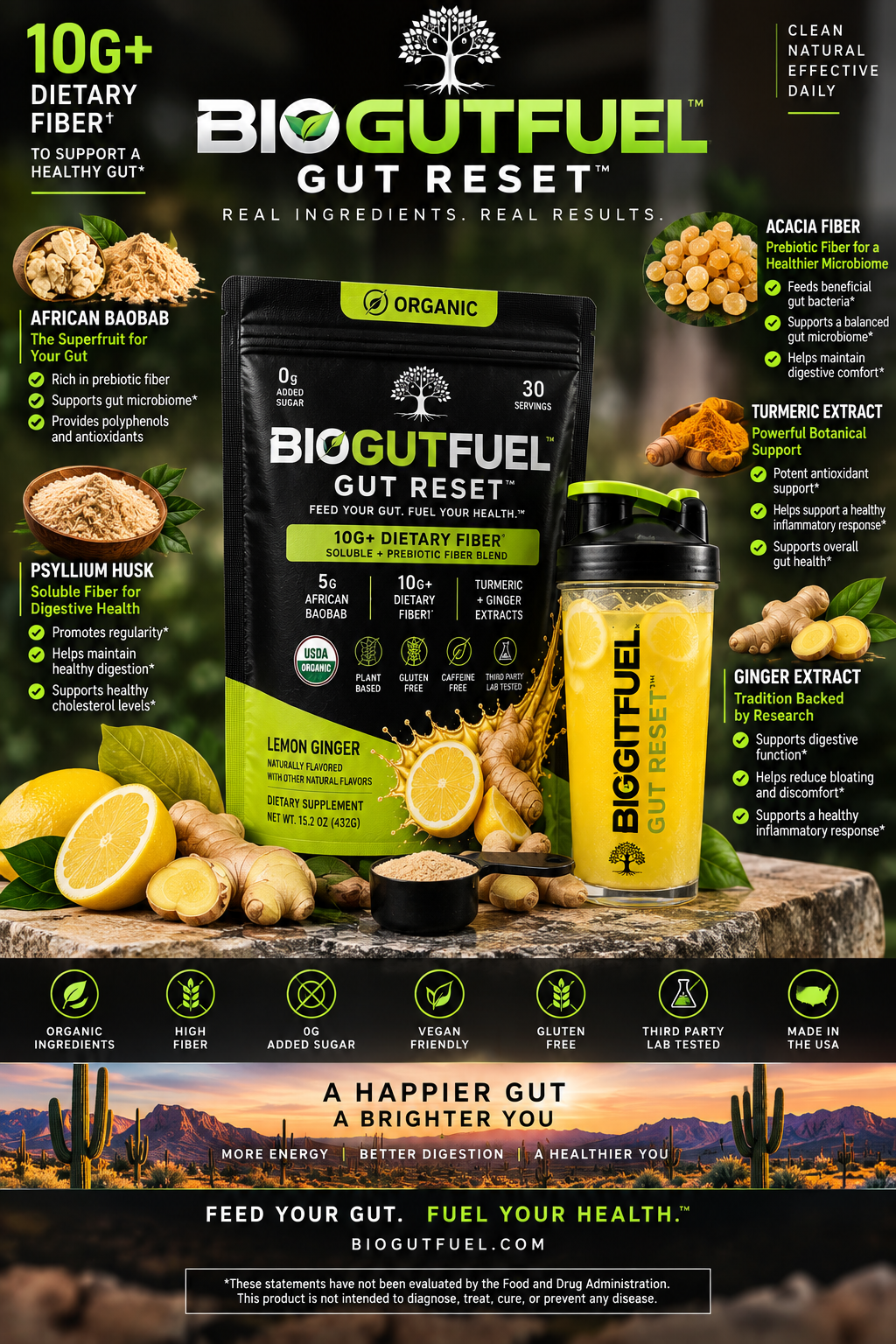
For a convenient option, BIOGUTFUEL GUT RESET provides 13 grams of daily fiber per serving from baobab, psyllium husk, and acacia. Its four-part approach helps close the daily fiber gap, offers prebiotic support to nourish beneficial gut bacteria, supports digestive comfort and regularity, and supports a healthy inflammatory response with turmeric, ginger, baobab, and plant polyphenols.
Each pouch contains 30 servings for a 30-day routine. Mix one serving daily into 10–12 ounces of cold water; do not exceed one serving a day. Whatever option you choose, start with the label, build gradually, and judge the routine by comfort and consistency—not promises.
Common questions
What is the best fiber supplement for everyday regularity?
Psyllium is a well-established option for supporting regularity and stool consistency. The best fit still depends on your existing fiber intake, tolerance, and ability to follow the mixing directions.
Is a prebiotic supplement better than a fiber supplement?
Not necessarily. Some fiber supplements also provide prebiotic support. Choose based on your goal: feeding beneficial gut bacteria, supporting regularity, or both.
How can I start a fiber supplement without overdoing it?
Check your current intake, choose a clearly labeled product, and increase total fiber gradually within its directions. Use the recommended liquid and track digestive comfort before making another change.
This article is general nutrition education, not medical advice. Talk to your healthcare provider before changing your routine, especially if you are pregnant, nursing, taking medication or managing a digestive condition.
Put it into practice
Support your gut daily with BIOGUTFUEL
Everything in this article gets easier with consistency. BIOGUTFUEL GUT RESET combines prebiotic fiber and baobab to support digestive comfort, healthy regularity, a healthy inflammatory response and your daily fiber target — one scoop a day.
Reader offer — 15% off your first order
GUTFUEL15
Apply at checkout. First order only.
Not sure where your gut stands?
Answer 10 quick questions and get a free, personalized 30-day gut support plan — digestive comfort, prebiotic support, fiber and daily wellness.
Keep reading
Your gut has more to say.
The next small change is one article away. Pick up where this one left off.
How much fiber do you actually need?
Guide #01The real daily target, why most people miss it by half, and how to close the gap without a week of bloating.
Read next →Gut BasicsPrebiotic vs. probiotic
Guide #02One adds bacteria, the other feeds the ones you already have. Here's which matters for your routine.
Read next →FoodFoods that support gut health
Guide #03Prebiotic fiber, fermented foods and polyphenols — plus an easy 30-plants-a-week habit.
Read next →